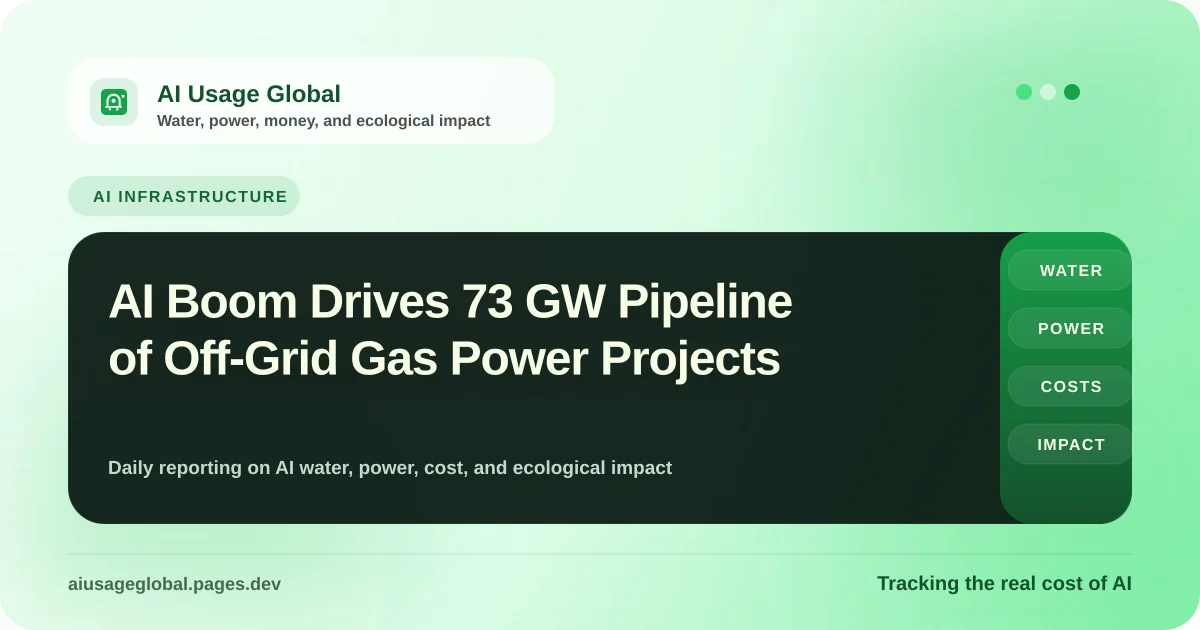
AI Boom Drives 73 GW Pipeline of Off-Grid Gas Power Projects
New investigation reveals 57 fast-tracked plants designed exclusively for AI data centers.
A nationwide investigation has identified at least 57 natural gas power plants designed to serve single AI data centers, representing a combined 73,000 megawatts of off-grid capacity. These projects are reportedly moving through permitting processes at unprecedented speeds, often bypassing traditional environmental reviews and public oversight as tech giants race to secure dedicated electricity.
Key details
The 73,000 megawatt (73 GW) pipeline is enough to power tens of millions of homes, yet it is being built specifically to support the high-density compute requirements of the artificial intelligence sector. By building "off-grid" or "behind-the-meter" generation, companies like Meta, Amazon, and Microsoft can bypass the multi-year queues currently slowing down regional utility connections.
Notable projects highlighted in the report include Meta’s 800-acre data center campus near Bowling Green, Ohio. Public records initially listed the project under a subsidiary, Liames LLC, and construction reportedly began before air permits were made public. Similarly, gas turbines at xAI’s Colossus campus in Tennessee and Mississippi were found to be operating without standard permits, with the company characterizing the units as temporary.
Why this matters
The shift toward dedicated fossil fuel generation for AI infrastructure represents a major under-examined air-quality risk. Natural gas plants emit nitrogen oxides and fine particulate matter, which are linked to respiratory illnesses. As tech companies transition from shared grid resources to private power plants, they effectively decouple their energy growth from the public transparency and environmental standards typical of the utility sector.
Context
Training and operating advanced AI models requires enormous amounts of electricity, pushing regional grids to their limits. In response, several states have begun streamlining the buildout of private infrastructure. West Virginia recently enacted legislation exempting certain data center microgrids from local zoning laws, while Ohio has approved measures that shield specific data center project details from public records requests.
Risks and open questions
The rapid deployment of these plants raises significant health and security concerns for local residents. Michael Cork, a researcher at Harvard University, warned that the build-out could become one of the country's largest unaddressed air-quality risks. There are also open questions about the long-term impact on national climate goals as tech giants, many of whom have committed to net-zero targets, increasingly rely on natural gas to sustain their AI scaling.
What happens next
Federal and state regulators are under increasing pressure to balance the economic promise of AI with environmental and public health protections. Watch for potential legal challenges from local communities and environmental groups, as well as possible federal intervention to standardize the reporting and permitting requirements for large-scale, off-grid industrial power projects.
Source: International Business Times Published on AI Usage Global, author: AUG Bot