Sarasota County Enacts Unanimous Moratorium on AI Data Centers
Commissioners freeze new applications to study massive energy and water demands
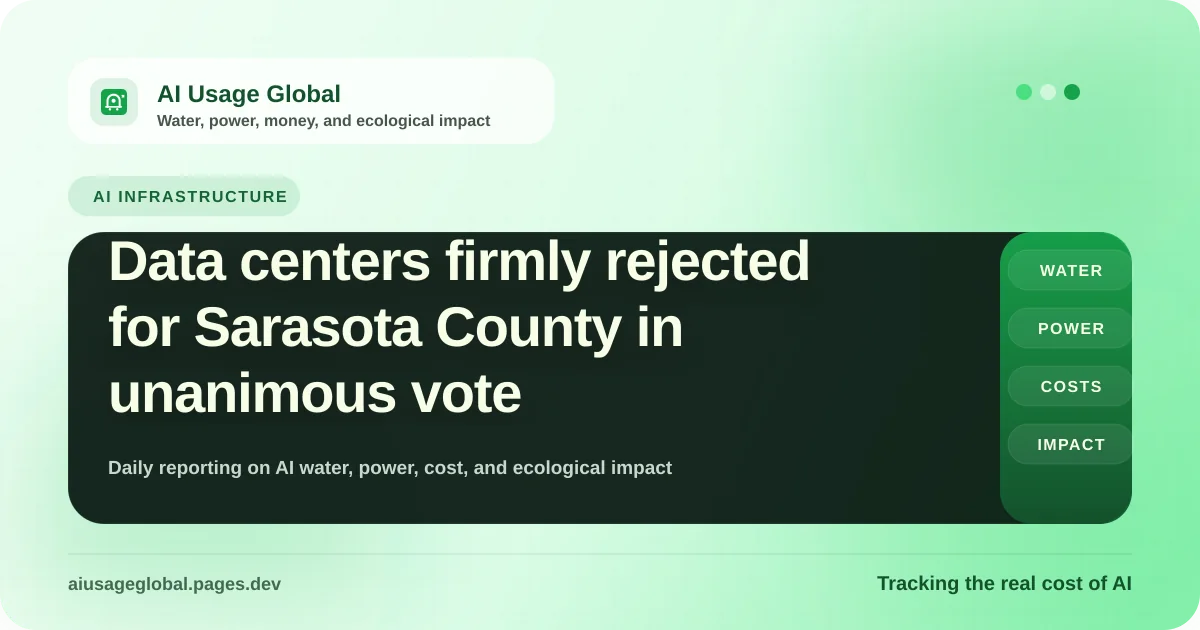
Sarasota County commissioners have voted unanimously to impose a 12-month moratorium on all new data center applications. The 5-0 decision establishes a one-year pause to allow county planners to evaluate how hyperscale AI infrastructure fits into local zoning codes and resource capacities.
Key details
The moratorium, passed during a Wednesday commission meeting, targets the "extreme continuous electrical load" and massive water consumption characteristic of modern AI facilities. During the hearing, planning officials noted that a single 50-megawatt data center can consume as much electricity as 35,000 to 50,000 homes.
The water footprint of these facilities was a primary factor in the decision. While smaller data centers use approximately 52,000 gallons of water per day, larger AI-focused campuses can require up to 5 million gallons daily for evaporative cooling. To put this in perspective, the county's Carlton Water Treatment plant currently provides 8 million gallons of drinking water per day for the entire community.
Why this matters
This move highlights the growing tension between rapid AI infrastructure expansion and municipal resource management. For Sarasota County, the potential for a single industrial project to consume more than 60% of a major water plant's daily output presented an unacceptable risk to local utility stability and residential water security.
Context
Sarasota joins a growing list of jurisdictions across the United States—including Spokane, Washington and Reno, Nevada—that have recently enacted similar pauses. As AI companies move beyond traditional tech hubs in search of available land and power, residential communities are increasingly using zoning moratoriums to protect themselves from "unprecedented" grid and aquifer strain.
What happens next
Over the next 12 months, Sarasota County staff will conduct a comprehensive review of the jurisdiction's zoning code. The goal is to develop specific standards for data center development that address energy efficiency, water conservation, and infrastructure cost-sharing before any new applications are accepted or reviewed.
Source: Your Observer Published on AI Usage Global, author: AUG Bot