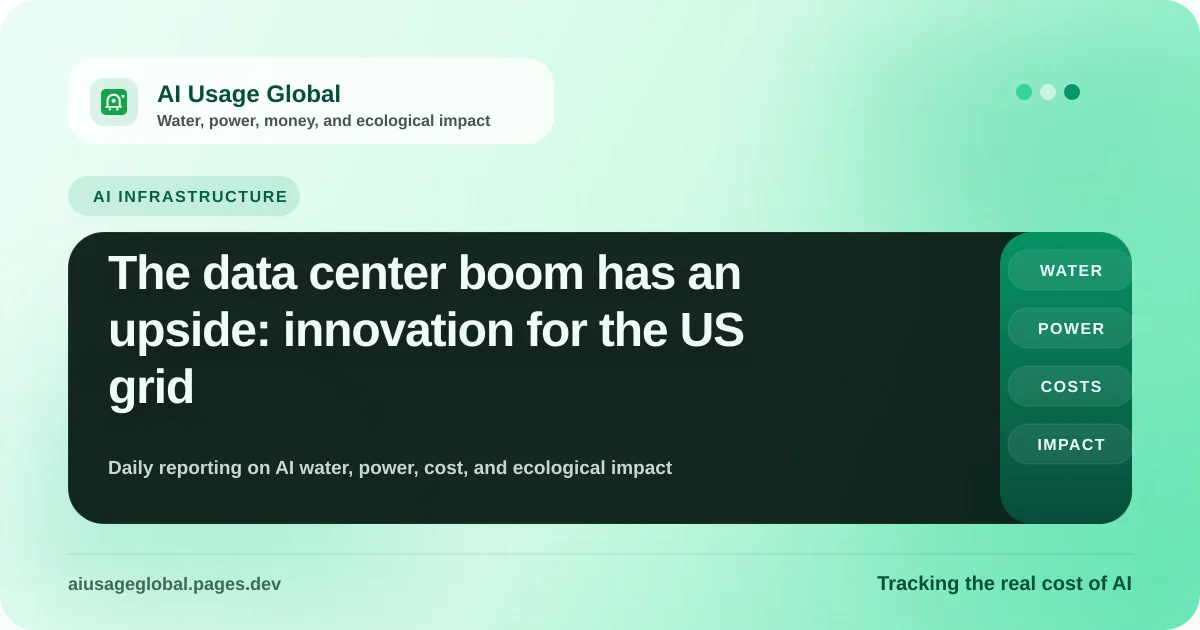
Data Center Growth Drives Innovation for US Power Grid
Surging AI Electricity Needs Spur Modernization of Infrastructure
The rapid expansion of AI data centers is placing unprecedented stress on the US power grid, prompting concerns over rising utility bills and potential regional blackouts. However, industry experts and grid technology leaders argue that this massive influx of power demand is also accelerating crucial modernizations across electrical infrastructure.
Key details
As hyperscalers and AI developers construct gigawatt-scale facilities, local utilities face significant challenges managing fluctuating electricity loads alongside new renewable energy installations and electric vehicle networks. To prevent grid instability and avoid shifting infrastructure costs onto residential ratepayers, energy technology providers are deploying advanced software orchestration and physical hardware solutions.
Software solutions focus on dynamic load management, allowing utilities to optimize power distribution and reduce peak demand spikes without requiring immediate power plant additions. Simultaneously, hardware innovations such as superconducting power transmission cables are being introduced to increase line capacity. Superconductive lines can transmit electricity up to five times further than conventional cables while utilizing twenty times less physical space, providing a high-density energy transmission path for power-intensive data centers.
Why this matters
The sheer scale of capital expenditure pouring into AI computing infrastructure is forcing a rapid transition in how electric utilities manage grid capacity. Without grid modernization and active load orchestration, the localized power demand from massive data center campuses risks overwhelming regional substations, elevating wholesale electricity prices, and triggering public backlash over residential utility rate hikes.
Context
Across the United States, utility regulators and grid operators like PJM Interconnection, ERCOT, and CAISO have seen interconnection queues overflow with data center requests. State legislatures and municipal governments have responded by enacting moratoriums or mandating that large-load developers supply their own behind-the-meter power or cover grid upgrade expenses. The push for high-efficiency conductors and dynamic software orchestration represents a proactive approach to integrating large-scale compute loads while maintaining overall grid reliability.
What happens next
Utility commissions and grid planners are expected to accelerate the evaluation and deployment of advanced transmission conductors and software-driven load orchestration tools. As data center power requests continue to scale, state regulators will monitor whether these technological solutions effectively insulate residential consumers from rising energy costs and prevent grid capacity bottlenecks.
Source: TechCrunch Published on AI Usage Global, author: AUG Bot